Floating in Poker: Understanding the Call with a Plan to Bluff
By the Editorial Team
In Texas Hold’em, a float is a call with a weak hand made with a later bluff in mind. In the classic sequence, the player calls the flop to consider betting if the opponent checks the turn. The plan begins with the call but depends on the later action. [1][2]
An Example: Calling the Flop to Contest the Turn
In The Poker Bank’s teaching example, a player on the button calls a preflop raise from an opponent in middle position; the blinds fold. The player calls the flop c-bet because they know that opponent’s tendency to bet without a made hand. On the turn, the opponent checks, and the caller bets to try to take down the pot. [2]
The link between the call and the later intention characterizes the float in this example. A flop call alone reveals neither that plan nor the players’ cards. The sequence helps identify the play; it does not provide a guaranteed ending for other hands.
How Floating in Poker Changes with the Action
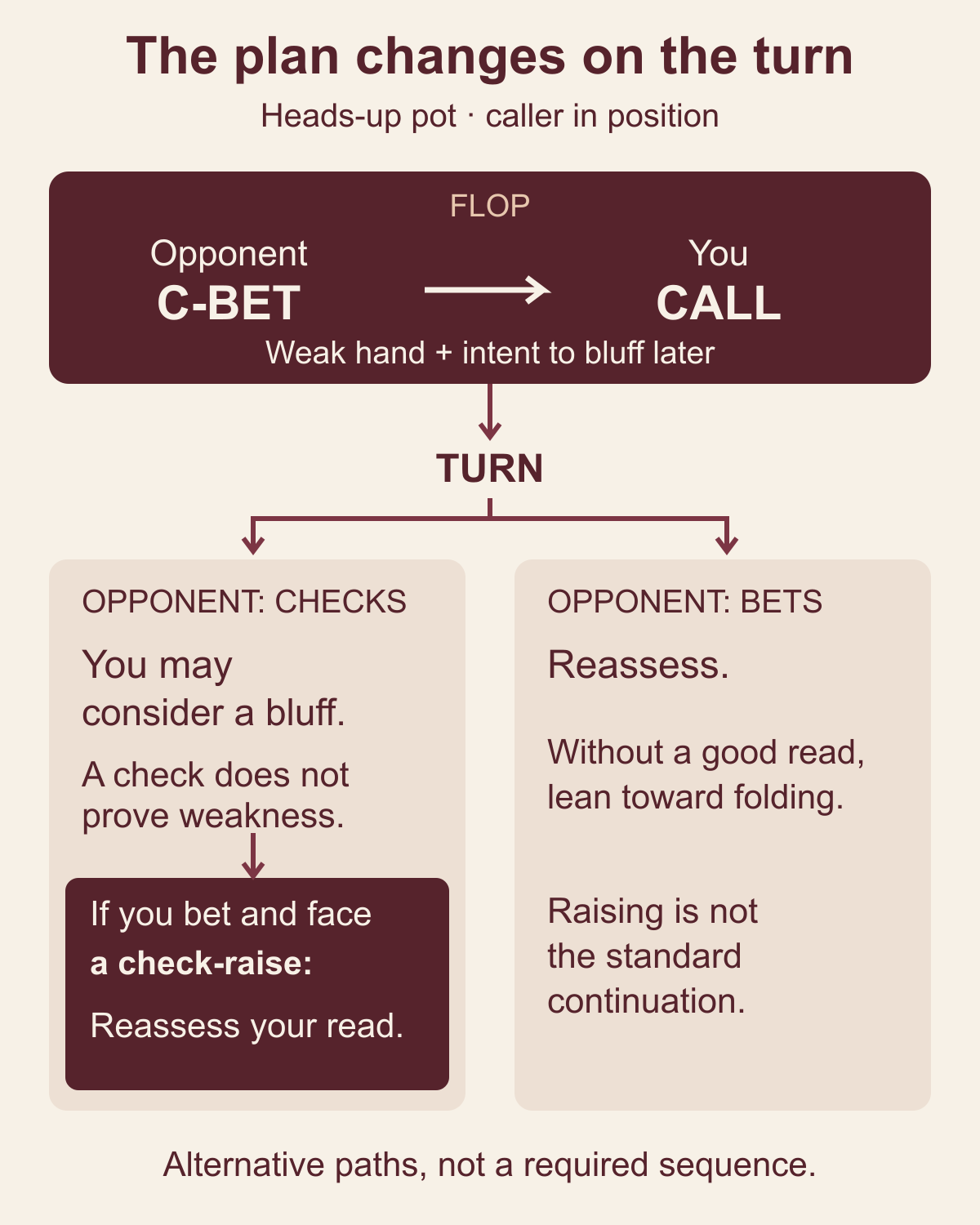
On the turn, reassess based on the opponent’s action:
- The opponent checks: the in-position caller can consider betting. A check does not prove weakness: the source warns that the opponent may respond with a check-raise, checking and then raising the bet.
- The opponent bets again: the opportunity to bet after a check is no longer available. The classic guidance is to lean toward folding when you do not know that opponent well. Raising a second bet interpreted as a bluff is presented as an advanced, dangerous move requiring a very good read.
- The opponent check-raises: the caller has already tried to induce a fold and now faces a raise. Reconsider the read before deciding whether to continue; the original plan alone does not justify persisting. [2]
What Read Supports the Call?
The behavior being targeted combines two things: betting the flop without enough strength and being capable of folding to later resistance. Knowing only the first tendency leaves the plan incomplete. A tight-aggressive, or TAG, player appears as a possible target in the classic approach, but the label cannot replace observing those responses. Someone who tends to call all the way presents a different obstacle to the bluff. [2]
Position determines what information arrives before the decision: acting after the opponent on the turn lets you see whether they bet or check. Out-of-position floats exist, but the source describes them as harder and potentially costly. [2]
The sources favor heads-up pots, with only one opponent, because more players add responses and possibilities of strong hands. Here, heads-up describes the pot; other people at the table may already have folded. These are conditions of the analysis, not a universal prohibition on floating in other situations. [2][3]
Cost and Alternatives When the Bluff Does Not Work
The call costs chips before the later opportunity appears. Upswing’s analysis calls for flexibility in response to bet size and some possibility of improving the hand, except against someone who bets the flop and gives up excessively afterward. That possibility provides an alternative to bluffing; it does not guarantee recovery of the investment. [3]
Floats, C-Bets, and Showdown Value
In the opening example, the c-bet is the aggressor’s continuation bet; the float is the caller’s plan. They occupy different sides of the sequence. The term float is not limited to responding to a c-bet, however, and the play should not become an indiscriminate response to those bets. [1][2]
A float does not have to end in a bluff. As later community cards and the opponent’s actions change the situation, you may also fold or try to win at showdown, the final comparison of hands. [2][3]
When Reviewing a Hand
Record the reason for calling, the action encountered on the next street, and the cost of continuing. Compare the actual decision with the read that supported it, rather than judging the float solely by the final result. [2][3]
Sources
- [1] Float — PokerLAB. Published on November 27, 2017.
- [2] The Float Play | Floating In Poker — The Poker Bank. By Greg Walker.
- [3] What is Floating in Poker | Beginner's Guide — Upswing Poker. Published on May 1, 2018.
 1 day ago