Probe Bets: Recognize the Sequence
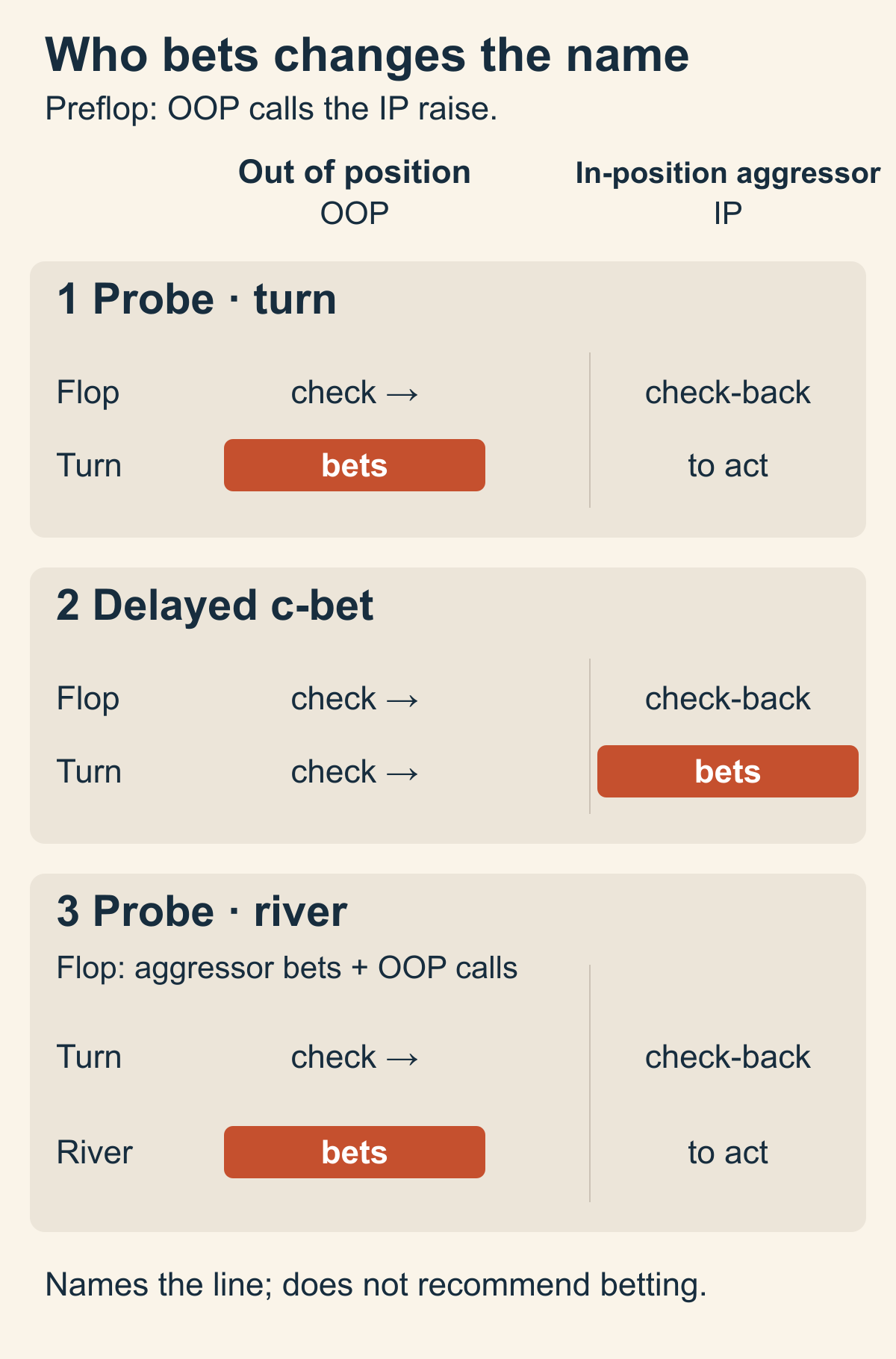
A probe bet is a turn or river bet by the player out of position after the in-position aggressor checked back on the previous street [1][2][3]. Out of position means acting before the opponent; the aggressor is the player who held the initiative, usually by raising preflop. Checking back means checking after the other player checks.
For example, you call a button raise from the big blind. On the flop, you check and the button checks back instead of making a continuation bet. If you lead the turn, that bet is a probe [3]. If you check again and the button bets, it is a delayed c-bet, because the original aggressor is betting.
Distinguishing a Probe from Other Bets
The illustration shows the turn and river sequences; the table also includes related betting lines:
| Line | Who bets | Street | Defining sequence |
|---|---|---|---|
| Flop c-bet | The aggressor | Flop | They raised before the flop and are the player who bets the flop [2][3] |
| Probe bet | The player out of position, without the initiative | Turn or river | The aggressor in position checked back on the previous street [1][2][3] |
| Donk bet | The player out of position | Flop, or any street after calling a bet, depending on the definition [1][2] | They lead into the aggressor before the aggressor acts [1][2] |
| Delayed c-bet (delayed continuation bet) | The aggressor, either in or out of position | Turn | They checked the flop and bet later [2] |
| Follow-up bet in the probe line (second barrel) | The player who made the probe | River | They follow the turn probe with another bet [2] |
Donk bet is used narrowly for a flop lead [2] and more broadly for a lead after calling a bet on the previous street [1]. A river probe, in contrast, requires a turn check-back; there may have been bets on the flop. To study the continuation of a betting line already underway, see double barreling in poker.
Before Betting, Identify Your Objective
An opponent's check-back does not necessarily mean they are weak. Before betting, decide whether you want worse hands to call or better hands to fold; then consider the new card and the checking range—the set of hands your opponent could hold—to choose between betting and checking [1][2].
Recommended reading
- Continuation Bet: When to Bet or Check
- Double Barreling in Poker: How to Assess a Second Bet on the Turn
- Blocking Bets in Poker: Position, Purpose, and the Risk of a Raise
 1 hour ago