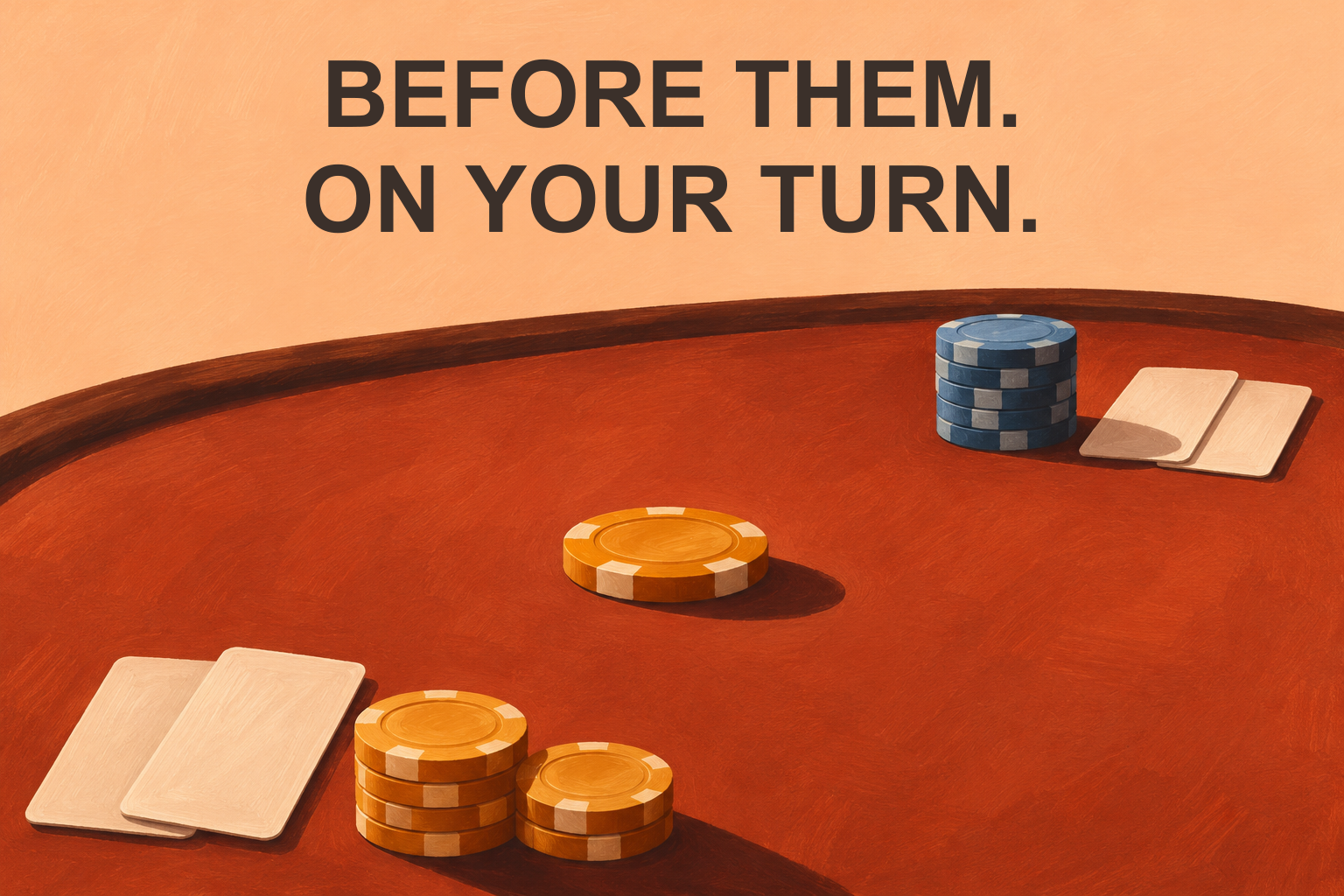
A donk bet is a bet by a player out of position who was not the aggressor on the previous street and who leads into that aggressor before they act. This denies that opponent the opportunity to make a continuation bet [1]. Being out of position means acting before a particular opponent in a betting round. The aggressor is the player who took the betting initiative on the previous street.
A donk bet is made on the bettor’s own turn, not out of turn, and does not by itself mean the play is wrong; the opponent can still call, raise, or fold [1][2].
Example: Top Pair and a Gutshot from the Big Blind
In this PokerStars Learn example, a player raises from middle position and you call in the big blind with J♣ 10♥. The flop is 10♣ 7♦ 8♠. You act before the raiser; if you bet now, you make a donk bet [1].
You have top pair and a gutshot: a nine would complete a straight. A range is the collection of hands a player could hold. This flop can connect well with the big blind’s calling range, while the raiser can still have unpaired high cards such as AK or AQ. If those hands would check back, checking lets them see the turn for free. Leading makes them pay to continue or fold [1].
The choice is therefore between betting now and giving the raiser the opportunity to bet or check. Compare the calls you might get from worse hands with the value of checking; do not decide only from the name of the play.
Donk Bets in Poker: How the Sequence Defines the Bet
The most common case occurs on the flop after a preflop raise is called [2]. The criterion, however, is the previous street, not preflop. If the aggressor bet the flop and was called, a turn bet by the player out of position, made before the aggressor acts, is also a donk bet [1].
In the most common line, the big blind checks to the raiser. This gives the aggressor the chance to make a continuation bet or check back [1]. Leading interrupts that sequence. This is why a donk bet is defined by the sequence, rather than by the hand making it.
The following cases distinguish a donk bet from other leads [1].
| Sequence | Is it a donk bet? | Reason |
|---|---|---|
| The preflop aggressor is called; the player out of position bets the flop before the aggressor acts | Yes | The bet denies the aggressor the opportunity to make a c-bet [1] |
| The pot was limped preflop and someone bets the flop | No: it is a lead | No player established the preflop initiative [1] |
| The aggressor bets the flop and is called; the player out of position bets the turn before the aggressor acts | Yes | The aggressor does not have the opportunity to open the street with a bet [1] |
| The flop checks through (a check and a check-back) and someone bets the turn | No: it is a lead | Without an identifiable aggressor on the previous street, the term does not apply [1] |
| On the same street, the player out of position checks, the aggressor also checks, and another player bets | No | The aggressor has already declined the opportunity to make a c-bet [1] |
Three related terms help show what the sequence excludes:
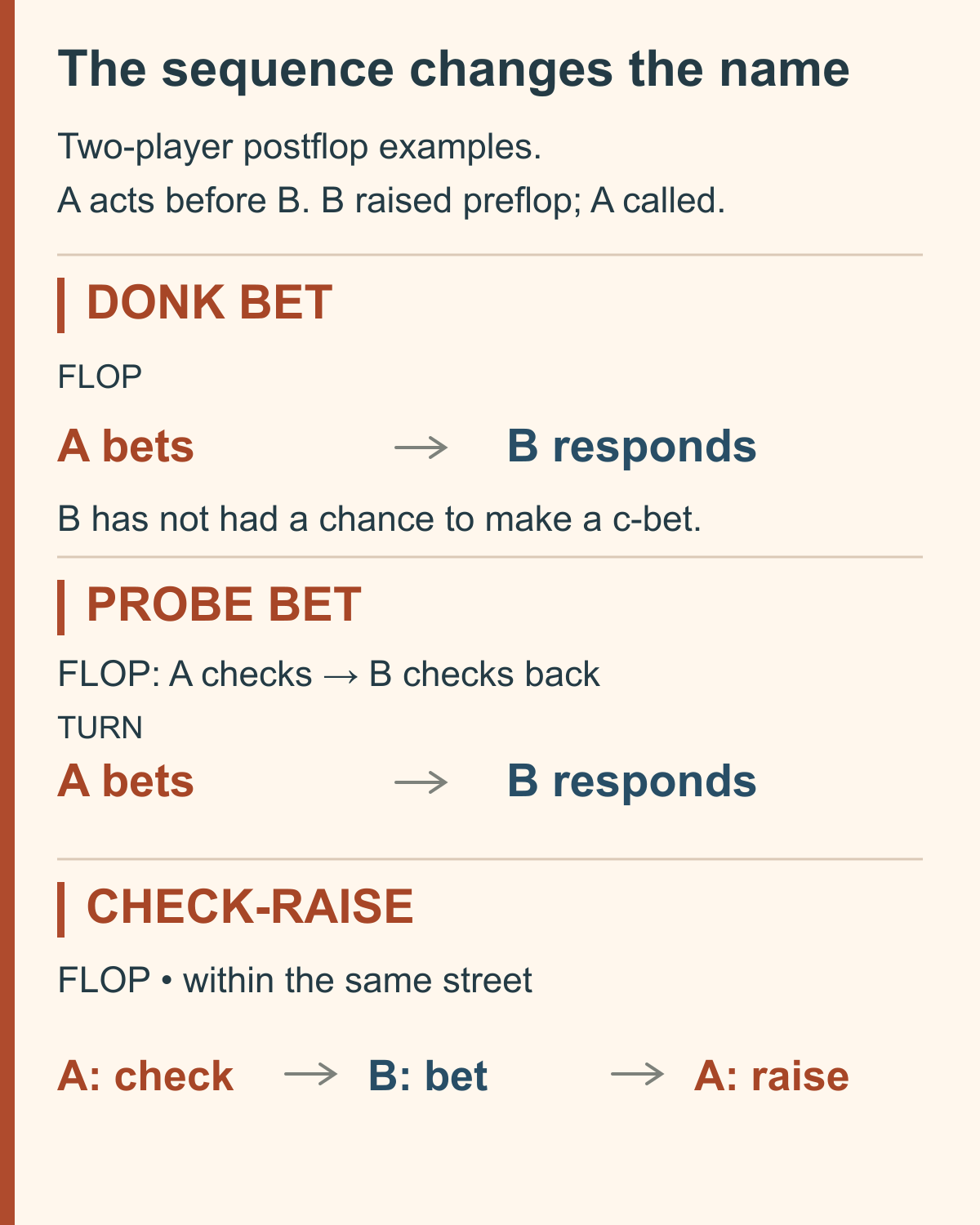
- C-bet: the aggressor’s bet, precisely the one that a donk bet prevents [1].
- Probe bet: an out-of-position bet on the turn or river after the aggressor checked back the previous street [4]. The previous-street check-back distinguishes it from a donk bet. See the probe bet guide for the full sequence.
- Check-raise: check, face a later bet, then raise when action returns. It requires a bet to raise: a round that checks through cannot contain a check-raise. In a multiway pot, another player may still bet after the aggressor checks [1][3].
Choosing Between Leading and Checking
Before leading, identify what the bet should accomplish and compare it with checking:
- Get calls from worse hands. Consider which weaker hands would call now and whether the opponent would check those hands behind. Betting can preserve value that would be lost if a later card stopped them from paying [1].
- Charge hands that could improve for free. On low or middling connected flops, checking may let high cards or draws see another card without paying. Leading makes continuing cost chips, but the opponent can raise: your bet does not guarantee seeing the next card at the price you chose [1][3].
- Choose a workable line for your hand. Some hands are too strong to fold, uncomfortable to check-raise, and difficult to check-call across several streets. Consider a lead when it serves value or protection better than those alternatives [1].
Checking also has benefits. You can observe whether the aggressor bets, and a strong hand may earn more by letting them bluff. If too many strong hands lead, the hands left in your checking range become weaker and easier to attack [3].
Leading can also drive away worse hands or build an awkwardly large pot out of position. Consider the opponent, the size of the bet, and how you would respond to a raise before committing chips [2][3].
Next Step: How to Review a Hand with a Lead
When reviewing a hand, record the sequence before evaluating the decision:
- Identify the aggressor and the street. Note who bet on the previous round, who acted before that player, and whether the aggressor had already checked on the current street. This distinguishes a donk bet from a lead after a check-back [1].
- Compare the available alternatives. What could be observed by checking? Did the hand fit better into a check-call, check-raise, or lead? Consider what would remain in the checking range as well [3].
- Examine the cost in context. Weigh the information revealed and the pot size against the opponent’s profile and the specific situation, rather than making donk-betting the default [2].
Recommended reading
- Probe Bets in Poker: Position and Action After a Check-Back
- Continuation Bet: When to Bet or Check
- Playing in Position in Poker: Information and Post-Flop Decisions
Sources
- [1] Donk Bet: What It Is and When to Make One — PokerStars Learn BR. January 30, 2026.
- [2] The Famous Donk Bet — GGPoker. GGPoker Team, May 28, 2024.
- [3] What is Donk Betting & Should You Ever Do It? — Upswing Poker. Team Upswing, August 16, 2021.
- [4] Probe Bets – How to Play Turns when the Preflop Raiser Checks Back — Upswing Poker. Ben Ward, January 5, 2018.

 23 hours ago