
What Poker Blockers Are
Poker blockers are cards you hold that remove combinations from your opponent’s range, the set of hands they could have. Each card exists only once: the card in your hand cannot be in theirs. [1][3]
Example: A♠ on the K♠ J♠ 2♦ 7♠ Turn
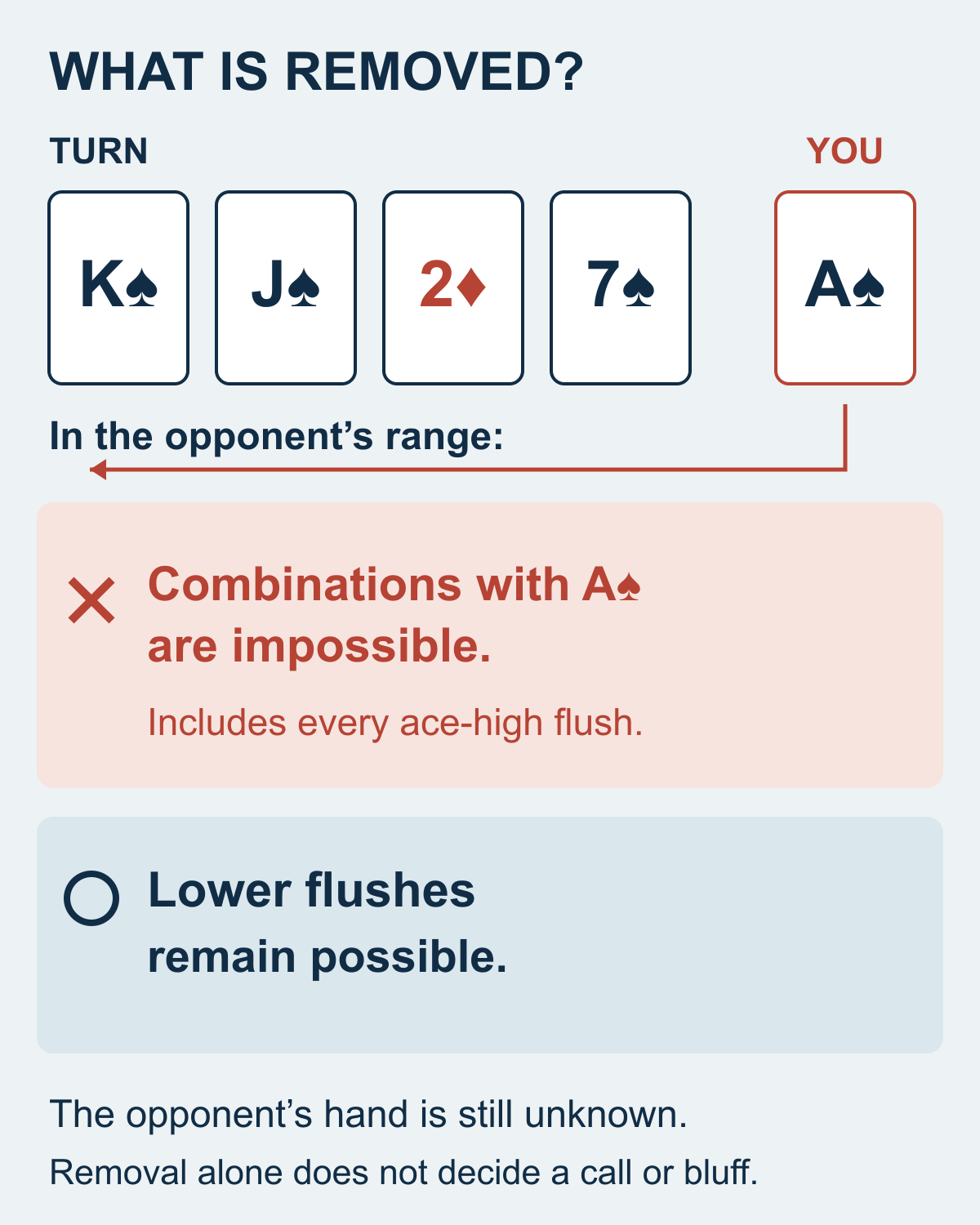
In SoMuchPoker’s Texas Hold’em example, the turn board is K♠ J♠ 2♦ 7♠ and you hold the A♠. Your opponent cannot have an ace-high flush, because every such combination would need the card you hold. They can still have a lower flush made with two other spades. [2]
How the Range Changes the Weight of Card Removal
Start with the hands your opponent would reach the situation with, considering their actions and the board texture. Then remove the combinations that use your cards. If a hand was already outside that range, blocking it does not change the assessment. [2][3]
When a range is narrower, removing a few combinations can affect a larger share of the relevant hands. This helps explain why blockers often become more important on the river, after earlier actions have narrowed the possibilities. Their effect depends on that composition, rather than simply on the street’s name. [3]
What to Block When Bluffing, Calling, or Value Betting
The useful card changes with the purpose of the action:
- Bluffing: look to remove hands your opponent would call with. Reducing those combinations removes some of the resistance to your bluff. [3]
- Bluff-catching: when calling to beat a possible bluff, prefer blocking the opponent’s value bets while leaving their bluffs available. Removing bluffs reduces the very hands your call would beat. [3]
- Value betting: prefer leaving weaker hands available to call. Blocking them removes potential customers for your bet. [3]
Blockers help you compare value and bluff combinations, but the decision still requires considering the previous action and bet size. [2][3]
A Blocker Is Different from a Blocking Bet
A blocking bet is a small bet made out of position to try to prevent a larger bet from an opponent. A blocker describes the effect of a card; a blocking bet describes an action. Card removal exists whether or not you make that bet. [4]
Using This When Reviewing a Hand
In your next hand review, identify the combinations affected by your card and group them by what they would do: call, bet for value, or bluff. This comparison gives a practical purpose to asking “what does this card remove?” and helps you choose between available lines. To explore how to assess the strongest hands on a board, continue with nut advantage in poker.
Recommended reading
- Nut Advantage in Poker: Strong Hands and the Difference from Range Advantage
- Poker Board Texture: Connectivity, Suits, and Board Changes
- What Are Outs in Poker: Counting Cards Without Double Counting or Ignoring Dirty Outs

 1 hour ago