
Pot control means adjusting your investment in the pot to your hand’s relative strength. A smaller pot is worth considering when your hand can win at showdown but has little prospect of getting calls from worse hands against large bets. Checking, calling instead of raising, and using smaller bets are tools for making that decision [1][2].
Example: Middle Pair and a Flop Check-Back
Consider this hypothetical No-Limit Hold’em hand: you raise on the button with Q♠8♦, only the big blind calls, and the flop comes K♥8♣3♦. The big blind checks. You have a pair of eights—middle pair—and position to act after them.
Suppose your read is that this opponent tends to fold worse hands to a bet but continues with pairs of kings and other better hands. You may choose to check back, ending the betting round without adding chips. Your pair still has showdown value, but building a pot against that collection of calling hands does not look attractive.
There is a concrete cost. If the opponent would call with 7♠7♦, you miss value from that worse hand. If they hold A♣3♣, they see the turn for free; an A♥ would give them two pair and move them ahead of your eights. Look beyond the current pot size: compare the calls you expect to receive with the risk of granting that card.
The decision changes with the read. Against someone who calls a small bet with several lower pairs or weaker hands, betting may be more appealing. This example shows why you might consider checking, not a rule to always check middle pair.
When to Avoid Building a Large Pot
Three situations help organize the choice:
- Your hand beats some opposing hands, but few worse hands would call a large bet. Distinguish being ahead now from getting a favorable call. A hand with showdown value does not have to become a contest for your entire stack.
- You face a bet with a medium-strength hand. Compare folding, calling, and raising based on the price and the hands your opponent could hold. Calling instead of raising invests less, but the call itself still needs to be justified; “controlling the pot” does not make every price acceptable.
- You are out of position with a vulnerable hand. A check lets your opponent act; it does not end the round as a check-back does. Plan your response to the bet size you might face instead of checking without a plan [1][2].
On boards with draws, a free card may be more valuable to your opponent. With a strong hand and good prospects of calls from worse hands, checking may miss value. Position, board texture, and the caller’s behavior help distinguish these situations.
Checking, Calling, Small Bets, and Value Bets
| Choice | What it does | Question to guide the decision |
|---|---|---|
| Check back | Ends the betting round without adding chips, after all opponents have checked | What do I gain by waiting, and which calls from worse hands do I miss? |
| Call instead of raise | Pays the price already offered without increasing it | Is that price justified against the opponent’s possible hands? |
| Small bet | Offers a lower price to continue and adds fewer chips than a large bet | Which hands call this size, and what will I do against a raise? |
| Value bet | Chooses a size that gets calls from worse hands, extracting value from those calls | Which worse hands would call, and how does that change as I increase the size? |
“Small bet” describes the size; “value bet” describes the purpose. One bet can be both. Believing you have the best hand does not mean you should put as many chips as possible into the pot: a larger size may drive away the very hands you hoped would pay. The article on thin value in poker develops this connection between value and who calls.
The Two Limits of Checking
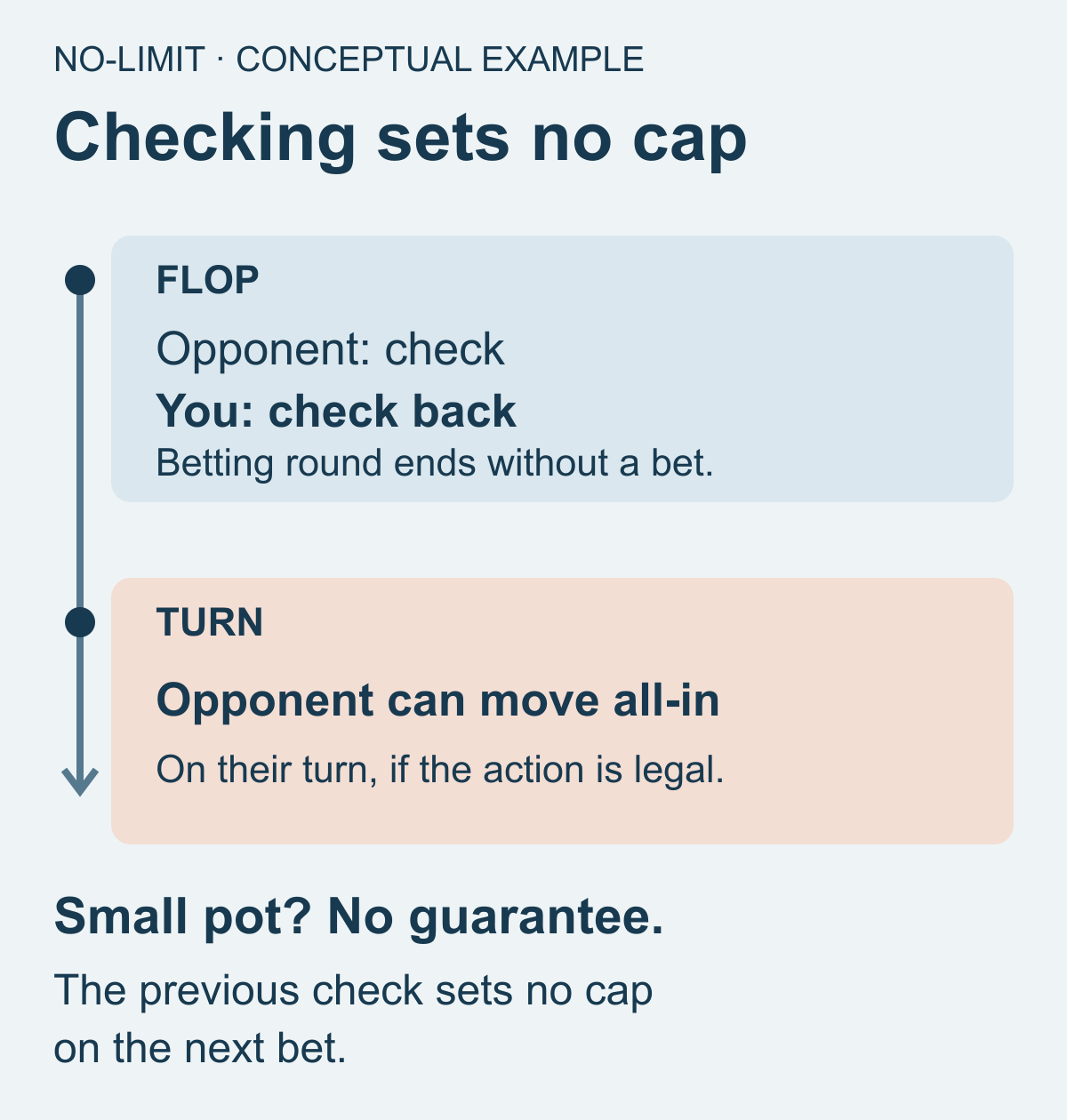
In no-limit, checking back now does not cap the opponent’s bet on the next street: they can still bet, including moving all-in. Checking may also forgo calls from worse hands and give a free card. Weigh those two costs against the benefit of investing less in this round [3].
Turning a Read into a Decision
In your next hand, identify the worse hands that would call a bet and compare a small size with a larger one. If you bet, choose the amount for its purpose and the expected response—the subject of poker bet sizing. If you check, be clear about which board change or opposing bet would make you reassess.
When reviewing the hand, record the reason for your choice before looking at the result. “I checked because I expected few calls from worse hands and still had showdown value” gives you a read to assess. “I checked for pot control,” on its own, does not explain the decision.
Recommended reading
- Showdown Value in Poker: Hand Strength and Decisions in Context
- Thin Value in Poker: A Marginal Bet Depends on Who Calls
- Poker Bet Sizing: Amount, Purpose, and Context
Sources
- [1] Pot Control Definition: All You Need to Know About Pot Control — PokerStrategy
- [2] Mastering Pot Control: A Strategic Guide — Chip Leader Coaching (January 19, 2024)
- [3] Why Pot Control Is A Bogus Concept — Red Chip Poker (April 17, 2018)
 21 hours ago