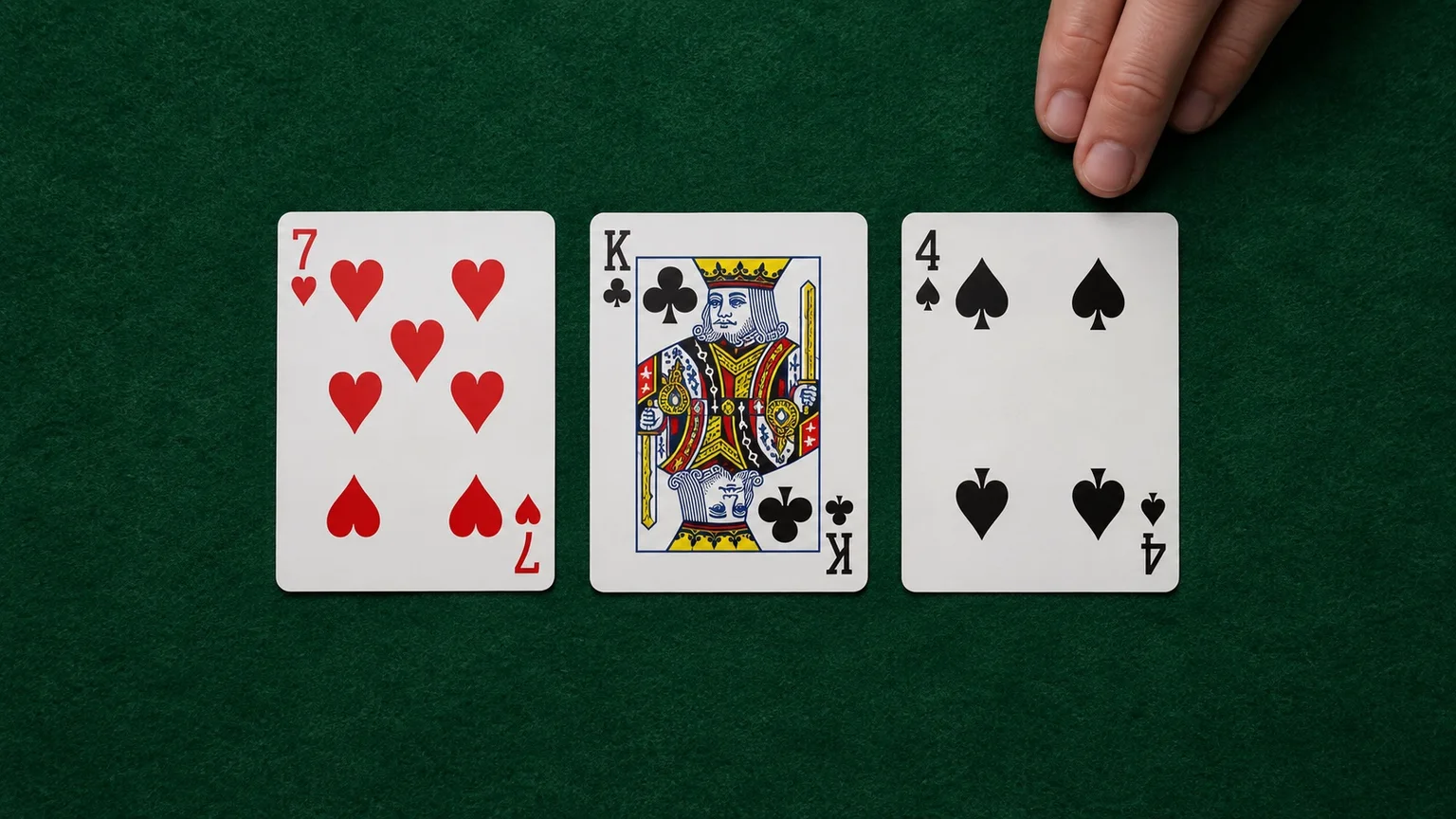
Calling in Poker: What It Means to Match a Bet
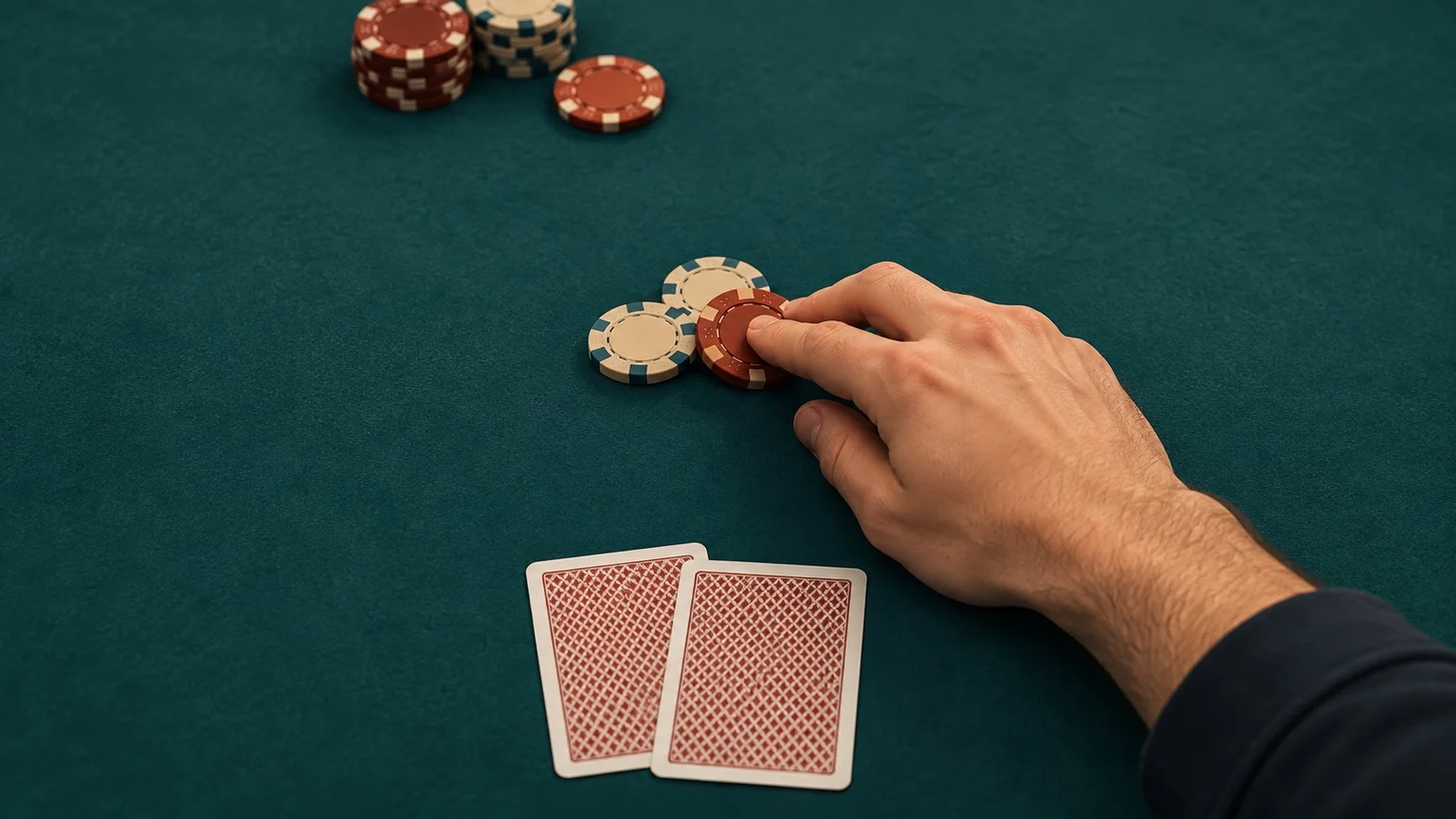
Calling means putting in the amount needed to match the current bet and stay in the hand, without raising that amount. The example below shows how much more to add when you have already contributed in the same betting round. [1][4]
Calling in Poker: How to Work Out How Much More to Put In
The example published by The Lodge Poker Club shows how a previous contribution reduces the amount needed to call a raise. It is an instructional scenario on the flop of a No-Limit Hold’em hand, with three players and US$30.00 in the pot. [4]
The sequence begins with the first player checking. The second bets US$20.00, and the third calls. The action returns to the first player, who raises to US$80.00 in total. The second player, who had bet, now needs to decide how to respond to the raise.
At this point, the required total is US$80.00. However, the second player has already put in US$20.00 during that same round. To call, they add only the difference:
US$80.00 − US$20.00 = US$60.00.
The second player adds US$60.00, bringing their contribution in the round to US$80.00. “Raised to US$80.00” means the new total, not another US$80.00 on top of the earlier bet. For a full call with enough chips, the rule is: [4]
> Call amount = total required in this round − your contribution in this same round.
The US$30.00 in the pot at the start of the flop provides context, but it is not the amount the second player needs to match. To work out how much to add, they consider the US$80.00 bet and the US$20.00 they have already put in during this round.
If a player does not have enough chips to call the full amount, they can put their remaining chips all-in or fold. [1]
The Difference Between Call, Check, Raise, and Fold
The table summarizes what changes when you call, check, raise, or fold. [1][2]
| Action | Meaning | Effect on Your Participation |
|---|---|---|
| Call | Put in the amount needed to match the current bet. | You stay in the hand without raising the bet. |
| Check | Pass the action without adding chips when you have no outstanding amount to match. | You stay in the hand without betting at that moment. |
| Raise | Increase the current bet when raising is available. | You set a higher total to be matched. |
| Fold | Give up the hand. | You stop competing for the pot; the chips you have already put in remain there. |
What Counts Pre-Flop
Pre-flop is the betting round before the first community cards, the flop, are revealed. In Texas Hold’em, the blinds put a bet into play before any voluntary decisions. Without a raise, the big blind is the reference amount for anyone who needs to call; if someone raises, the new total applies. [3][4]
Anyone who posted a blind can count that contribution when calculating how much more is needed. This explains why two players facing the same bet may need to add different amounts: one already has chips counted toward that round, while the other has not yet contributed. [1]
What Changes on the Flop
When the pre-flop round ends and the hand reaches the flop, the current bet amount resets to zero. The earlier chips remain in the pot, but they do not serve as credit toward calling a new bet in this round. [4]
There is also a distinction between a bet, the first wager of the round, and a raise, an increase to an existing bet. When there is no bet yet, putting in the first wager is betting. When someone has already bet, increasing the amount is raising. A call matches an existing bet; it neither starts nor increases that amount. [1][2]
When a Call Is Not Needed—and When Another Decision Arises
The Big Blind Can Check Without Putting In More Chips
Pre-flop, if the big blind has been posted in full and no one has raised, that player already has the required amount in the round. When the action reaches them, they can check because there is no difference to make up. They can also raise when that option is available. Even if the other players have matched the blind, the big blind must still have an opportunity to act. [1][3]
The small blind, by contrast, needs to make up the difference between the blind they posted and the current bet to stay in the hand. [1]
Action Can Continue After a Call
Your call does not end the round while other players still have the right to act. If someone raises and the action returns to you, you can call the new difference, fold, or raise when that option is available; what you have already put in counts toward that same round. Without another raise, the round ends once everyone still in the hand who is not all-in has matched the bet and had an opportunity to act. [1][3][4]
A Call Does Not Necessarily Reveal a Weak Hand
The word call tells you what action was taken: the player matched the bet without raising it. By itself, it does not identify the strength of their cards. The choice may depend on factors such as the hand, position, bet size, and assessment of the opponents. [2]
How to Recognize the Decision When It Is Your Turn
When it is your turn, identify the current bet and your contribution in that round to work out how much more is needed. The calculation tells you the call amount; it does not determine the hand’s outcome or show that calling is the best choice. [3][4]
Sources
- [1] Betting in poker — Wikipedia. Stated date: April 24, 2026.
- [2] What Does Call Mean in Poker? — Blue Lake Casino Hotel. Published on December 21, 2024.
- [3] How to Play Texas Hold'em - A Guide to Texas Hold'em Rules — PokerListings. Alex Sakuta, content editor. Published on November 12, 2021; updated on February 20, 2026.
- [4] What Does Call Mean In Poker? — The Lodge Poker Club. Published on December 22, 2023.

 3 days ago