Types of poker: how Hold’em, Omaha, Draw, and Stud differ

By Editorial Team
Texas Hold’em, four-hole-card Omaha high, Five Card Draw, and Seven Card Stud differ in how cards are dealt and combined. The table shows how many cards each player receives, which cards are shared, and how a five-card hand is made. Each game is then explained briefly. [1][4]
Four poker variants at a glance
| Game | Cards dealt to each player | Community cards | How to make a five-card hand |
|---|---|---|---|
| Texas Hold’em | Two private cards | Up to five | Best combination from private and community cards; all five community cards may be used |
| Four-hole-card Omaha high | Four private cards | Up to five | Exactly two private cards and three community cards |
| Five Card Draw | Five face-down cards | None | The individual five-card hand may change during the draw |
| Seven Card Stud | Seven cards dealt over successive rounds, some face up | None | Choose five of the seven individual cards |
Hold’em and Omaha use face-up cards shared by the players. Draw and Stud have no community-card pool: Draw has an exchange, while some of a Stud player’s own cards are visible to opponents. A visible Stud card still belongs to the player who received it. [1][4]
How each game works
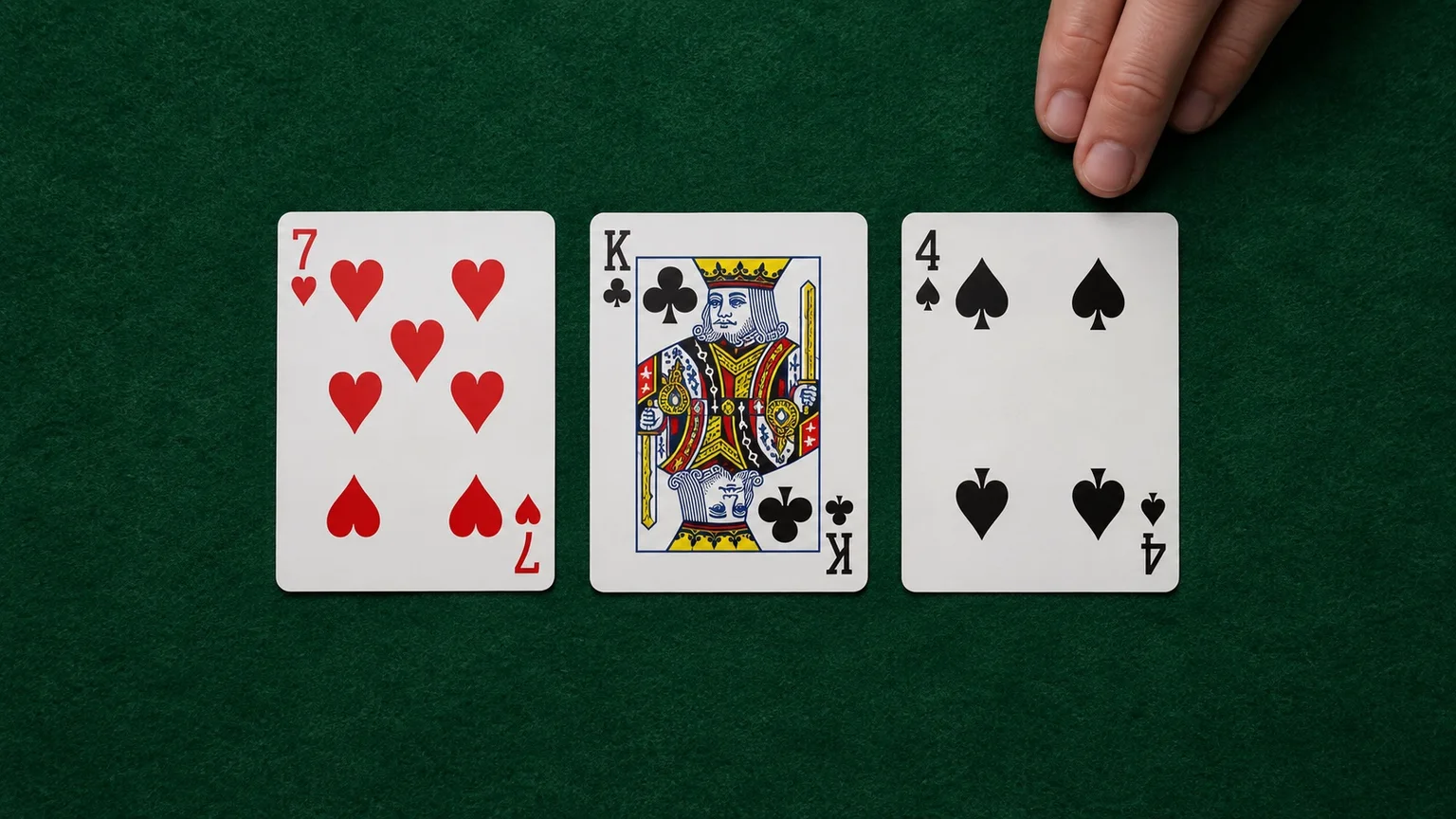
Texas Hold’em. Each player receives two private cards. The flop reveals three community cards, the turn adds one, and the river adds the fifth. If all dealing rounds are reached, a player’s best five-card hand may use zero, one, or two private cards; the five community cards alone can make the hand. A hand can also end earlier when everyone else folds, before all community cards are revealed. The freedom to choose from private and shared cards distinguishes Hold’em from Omaha. [1][3][4]
Four-hole-card Omaha high. Each player receives four private cards, and up to five community cards may be revealed. The final hand must use exactly two private cards and three community cards. Being dealt four private cards does not allow a player to use three or four of them in the final combination. This article covers four-hole-card Omaha high; Omaha-5, Omaha-6, and Omaha Hi/Lo are different variants. The required two-plus-three construction is the main difference from Hold’em. [2][4]
Five Card Draw. Each player receives five face-down cards and may exchange some of them before the final comparison. There are no community cards. Discarded cards leave the player’s own hand, and the replacements become part of that individual five-card hand. The exchange is the defining feature here, beyond the initial number of face-down cards. The specific game discussed is Five Card Draw, not every game in the Draw family. [1][4]
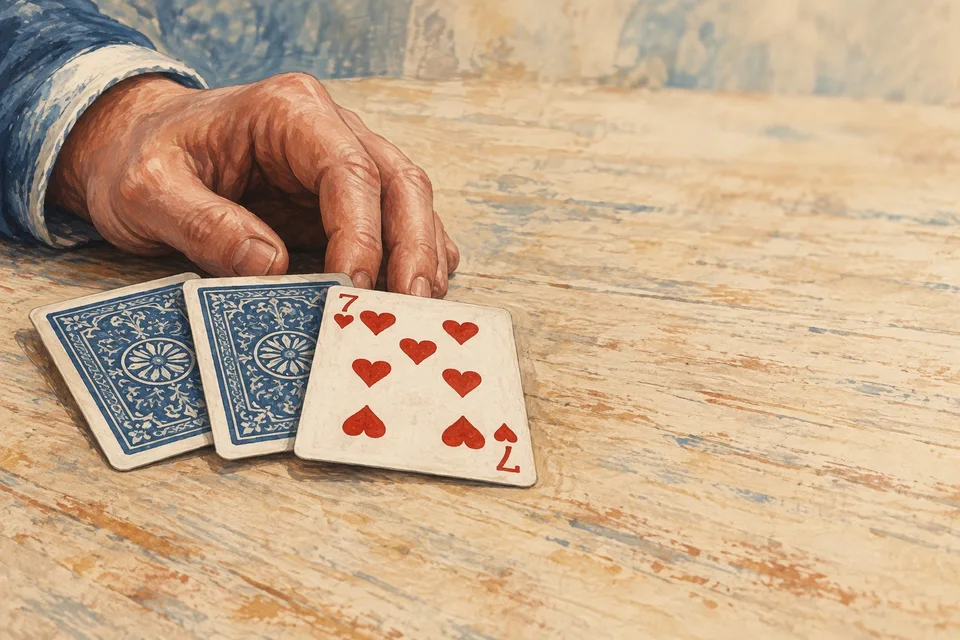
Seven Card Stud. Each player receives seven cards over successive rounds and selects five to make a hand. Some cards are face up, but they remain individual cards: opponents can see them, not use them. There is no community-card board and no card exchange of the kind found in Five Card Draw. This is traditional Seven Card Stud; Seven Card Stud Hi/Lo differs in how the pot can be divided. [1][3][4]
A game variant is different from a betting structure
The game’s name describes how cards are dealt and combined. No-Limit, Limit, and Pot-Limit describe betting structures, not a different deal. Texas Hold’em may be played as No-Limit or Limit; Pot-Limit Omaha combines Omaha’s card rules with a pot-based betting limit. “Cash game” and “tournament” describe the format of play and do not, by themselves, change how many cards a player receives. When reading a table name, identify the game and its specific variant first, then its betting structure. [2][3]
Summary
To tell these four games apart, ask where the cards in a hand come from. Hold’em lets a player make the best hand from two private cards and the community cards; four-hole-card Omaha high requires two private cards and three from the board; Five Card Draw begins with five face-down cards and allows an exchange; Seven Card Stud deals seven individual cards, some face up, and uses five. The betting structure is a separate piece of information. [1][2][4]
Sources
- [1] Poker — Wikipedia.
- [2] Tipos de poker: conheça mais de 10 modalidades — GipsyTeam. Published July 5, 2022.
- [3] Poker, Mais Que Um Jogo De Cartas... — Clube Paineiras do Morumby. Published March 1, 2023.
- [4] Tipos de poker: conheça mais de 10 modalidades — Lobbyze Blog. Published January 9, 2026.
 1 hour ago