
Backdoor draws in poker: why two cards are needed
By the Editorial Team
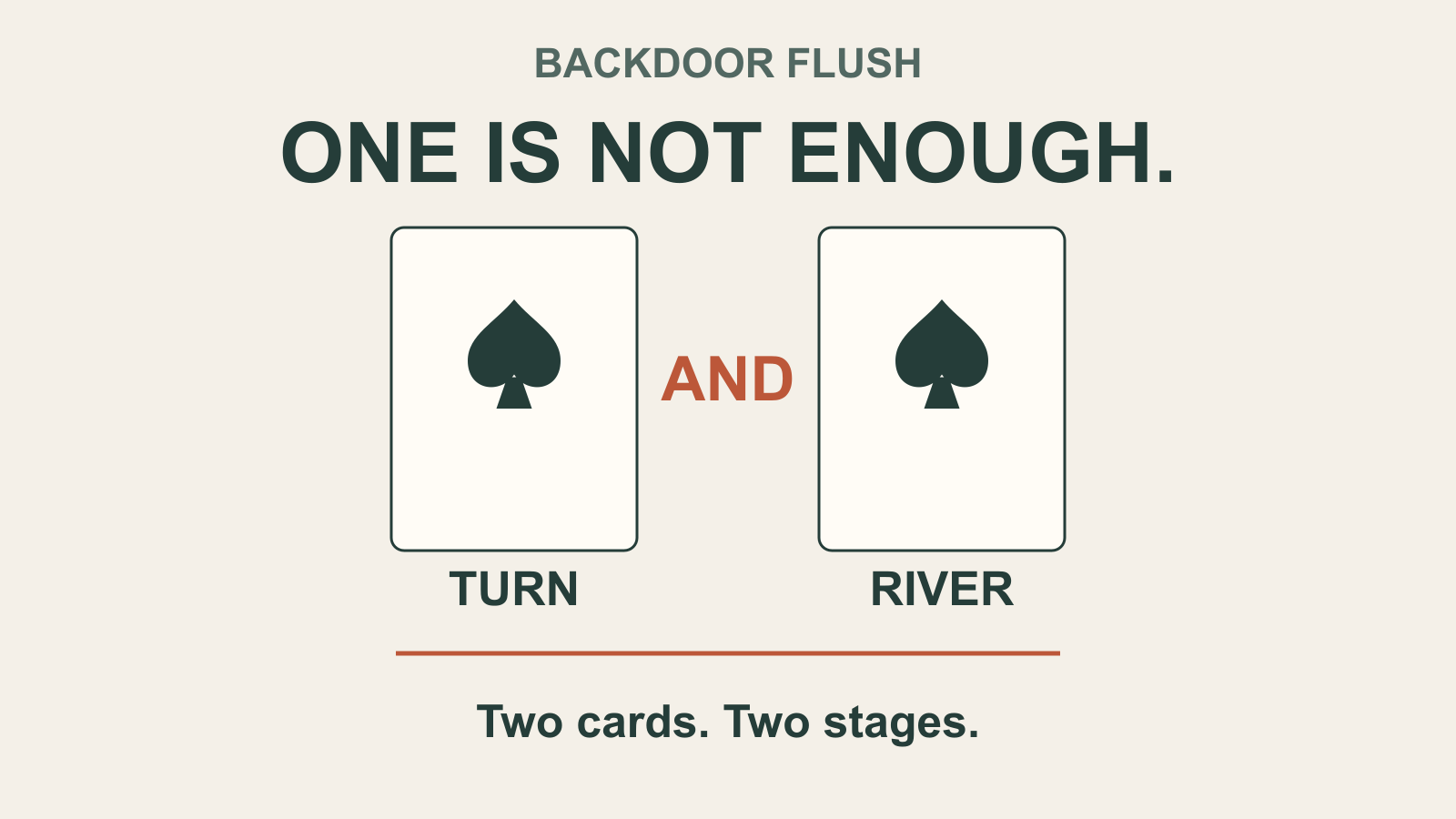
In Texas Hold’em, a backdoor draw is a draw that needs two consecutive favorable cards to complete the intended hand: one on the turn and another on the river. On the flop, a single card is not enough. The name runner-runner draw describes the need for both runners. [1][2]
A Backdoor Flush Example
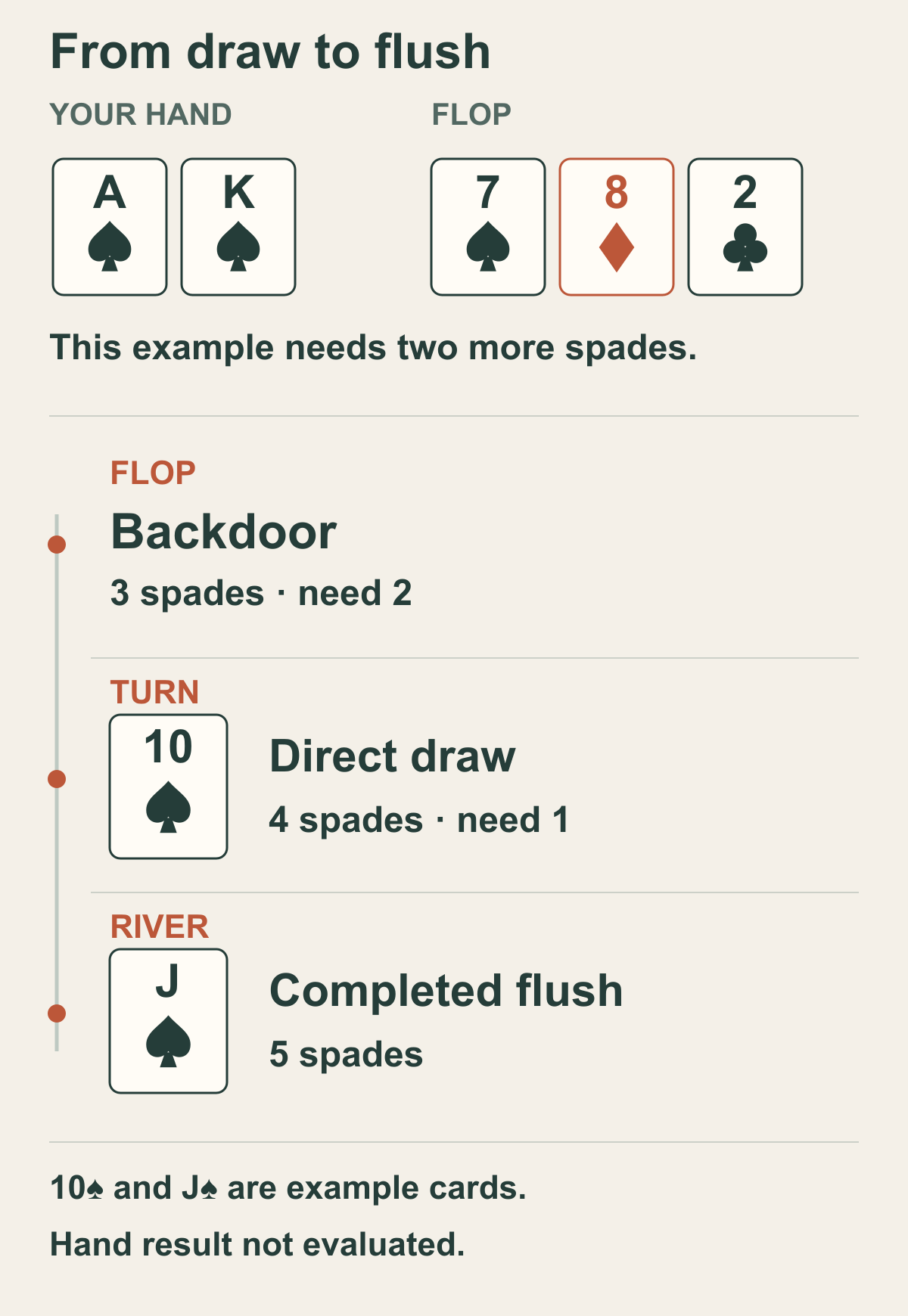
In Somuchpoker’s example, you hold A♠ K♠, and the flop is 7♠ 8♦ 2♣. The two spades in your hand and the spade on the flop provide three cards toward a flush, which requires five of the same suit. The source presents this development: [3]
| Stage | What changed for the spade flush |
|---|---|
| Flop: 7♠ 8♦ 2♣ | Three spades are available, counting A♠ K♠. Two are missing: this is a backdoor flush draw. |
| Turn: 10♠ | There are now four spades. A regular flush draw is created; one spade is still missing. |
| River: J♠ | The fifth spade completes the flush. |
The useful distinction is between picking up a regular draw on the turn and completing the flush on the river. The two cards perform different jobs. [1][3]
A Regular Draw or a Backdoor Draw?
In the regular flush-draw configuration described by the source, the player holds two cards of one suit and has two more of that suit on the flop. One more card of the suit on the turn or river is enough. In the backdoor example, the flop contains only one spade: both the turn and river must contribute. [3]
“Two favorable cards” does not require the two exact ranks in the example. For that flush, both cards must be spades. If the turn is not a spade, a spade on the river alone cannot complete this flush; if the turn helps but the river does not, the regular draw remains incomplete. [1][3]
What the Term Does Not Settle
Completing the hand does not establish a win. The example lets us identify the flush but supplies no opponent’s cards for a comparison. It also does not settle every other hand the cards might make.
Needing both cards does not guarantee seeing them. Bets and further decisions may come before completion. Recognizing a backdoor draw does not tell you the cost of continuing or justify a call on its own; the source warns against overvaluing the draw and committing too many chips. [2][3]
The idea also applies to straights. In that case, suitable ranks are needed at both stages, rather than the suit requirement of a flush. The shared principle is dependence on both runners, without treating the cards needed for the two hands as identical. [1][2]
An Exercise for Your Next Review
Pause on the flop and name the draw before looking at the following cards. Then check what the turn actually created and whether the river met the remaining condition. This keeps the final outcome separate from the situation that existed at each stage. [1][3]
Sources
- [1] Backdoor Draw - Poker Terms Glossary — PokerStrategy.com
- [2] What is a Backdoor Draw in Poker? — Americas Cardroom — published on October 9, 2025.
- [3] Backdoor Flush Strategy: Odds, Math & How to Profit — Somuchpoker
 1 day ago