
PFR in Poker: Meaning and Limits of the Preflop Statistic
By the Editorial Team
PFR stands for Preflop Raise and represents the percentage of hands in which a player raised before the flop. Poker tracking software uses it to show how often a player raises preflop.[1][2]
PFR in Poker: How to Calculate It
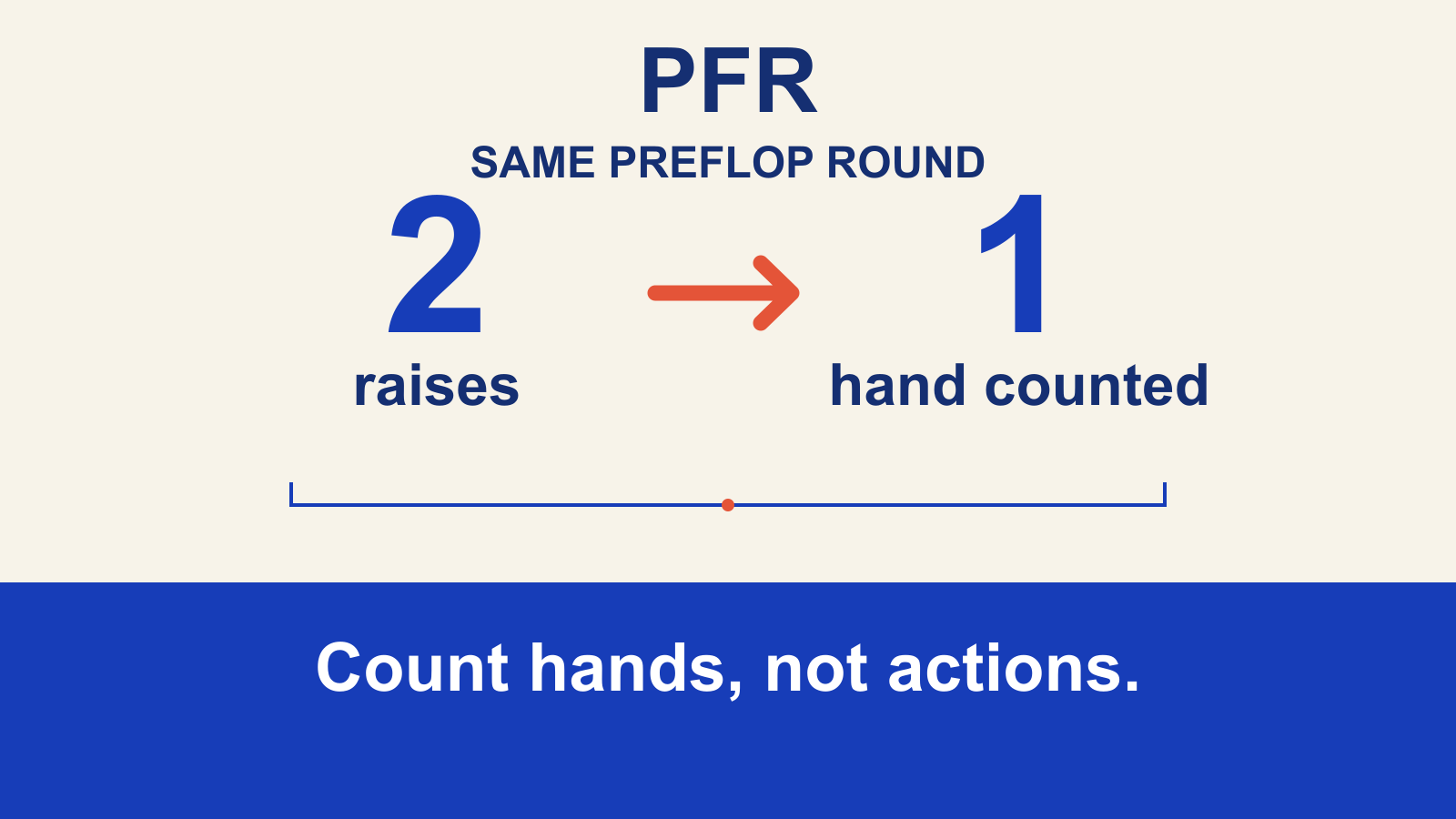
In FreeBetRange’s formula, the numerator counts hands with at least one preflop raise. The denominator includes hands in which the player took any action during that round: folding is an action too. Hands folded immediately therefore remain in the sample; the base is not limited to hands in which the player voluntarily entered the pot.[3]
PFR = hands with a preflop raise ÷ hands with any preflop action, including a fold × 100.
Hypothetical example: a sample contains 100 hands with preflop action, including hands the player folded immediately. In 15 of those hands, the player raised at least once. The calculation is 15 ÷ 100 × 100 = 15%. Multiple raises in the same hand still count as just one of the 15 hands. The result describes the frequency of hands with a raise, not the proportion of raises only among hands in which the player entered the pot.
Which Actions Count as a Preflop Raise
| Player’s recorded actions in the hand | Included in the count of hands with a preflop raise? |
|---|---|
| Raised before the flop | Yes |
| Raised more than once during the same preflop round | Yes, as a single hand |
| Folded immediately | No; the hand remains in the denominator of the formula above |
| Called but made no preflop raise | No |
| Raised only after the flop | No, not on the basis of that raise |
The criterion is raising before the flop, whether opening with a raise or raising over an earlier bet.[1][3]
What PFR Is Useful For
In comparable samples, a higher PFR indicates more frequent preflop raises; a lower PFR indicates fewer hands with a raise. This is the number’s first use: observing how often a player takes the initiative to raise before the flop.[1][3]
Comparing PFR with VPIP helps distinguish raising from entering through calls. VPIP includes hands with a preflop call or raise. With the same sample and counting criteria, PFR ≤ VPIP. They can be equal when every hand counted in VPIP also included a raise. A wider gap between the percentages represents a larger share of hands involving a call without a raise.[3]
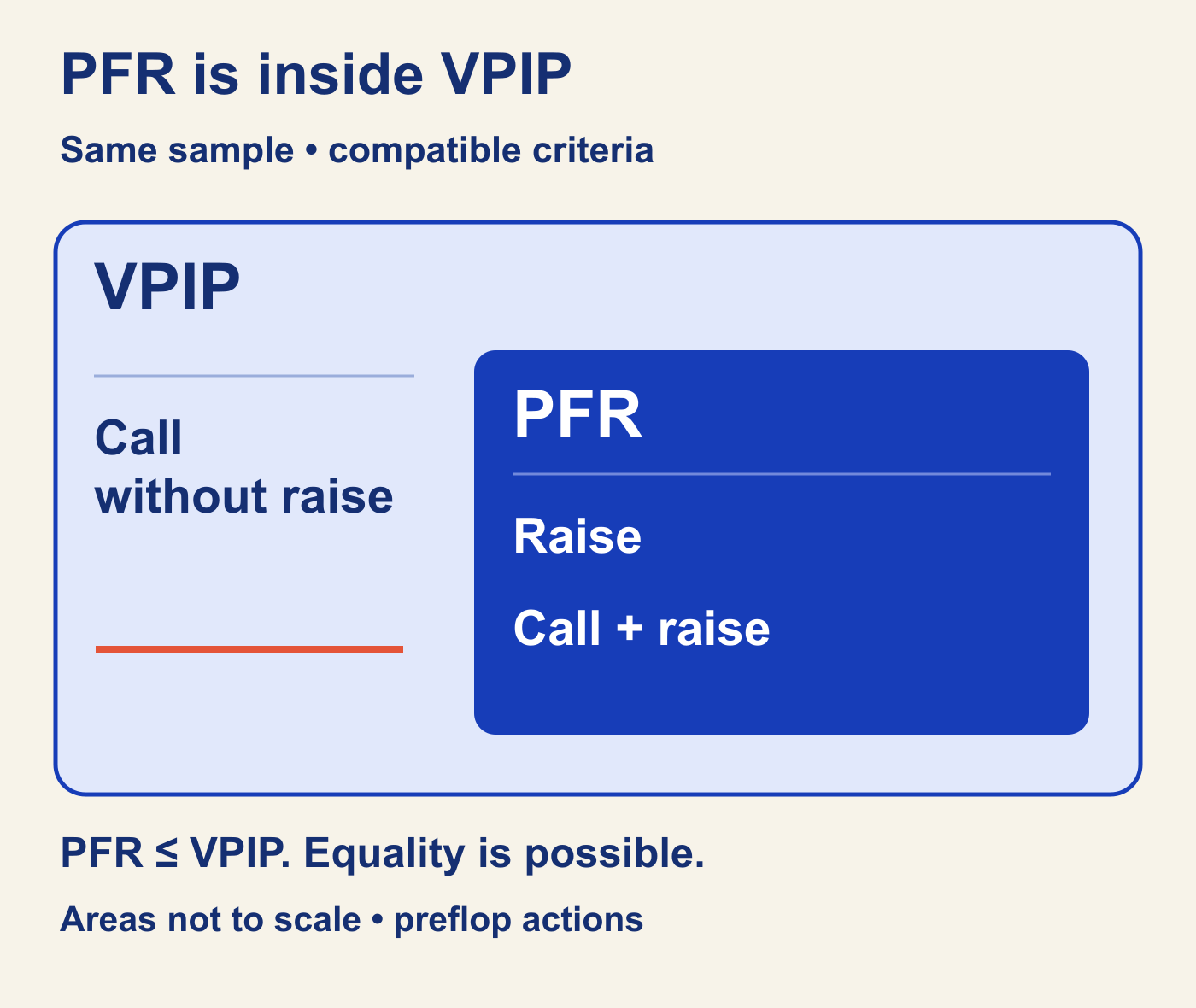
A hand containing a call followed by a raise counts toward both statistics. The difference between VPIP and PFR therefore represents hands with a call but no raise, rather than the total number of calls the player made.[3]
Using the Number to Read an Opponent
Check the software’s field definition once and use the same scope when comparing statistics. With few hands, avoid rushing to label an opponent’s playing style. Use PFR as a clue about raising frequency alongside the actions you observe; it cannot decide how to play a specific hand on its own.[3]
Sources
- [1] PFR — Glossary of Poker Terms — PokerStrategy.com — July 15, 2026.
- [2] PFR — PokerLAB — Online Poker Academy — November 27, 2017.
- [3] VPIP and PFR in Poker: How to Read Opponents — FreeBetRange — Konstantin Abbakumov — July 11, 2026.

 1 day ago